


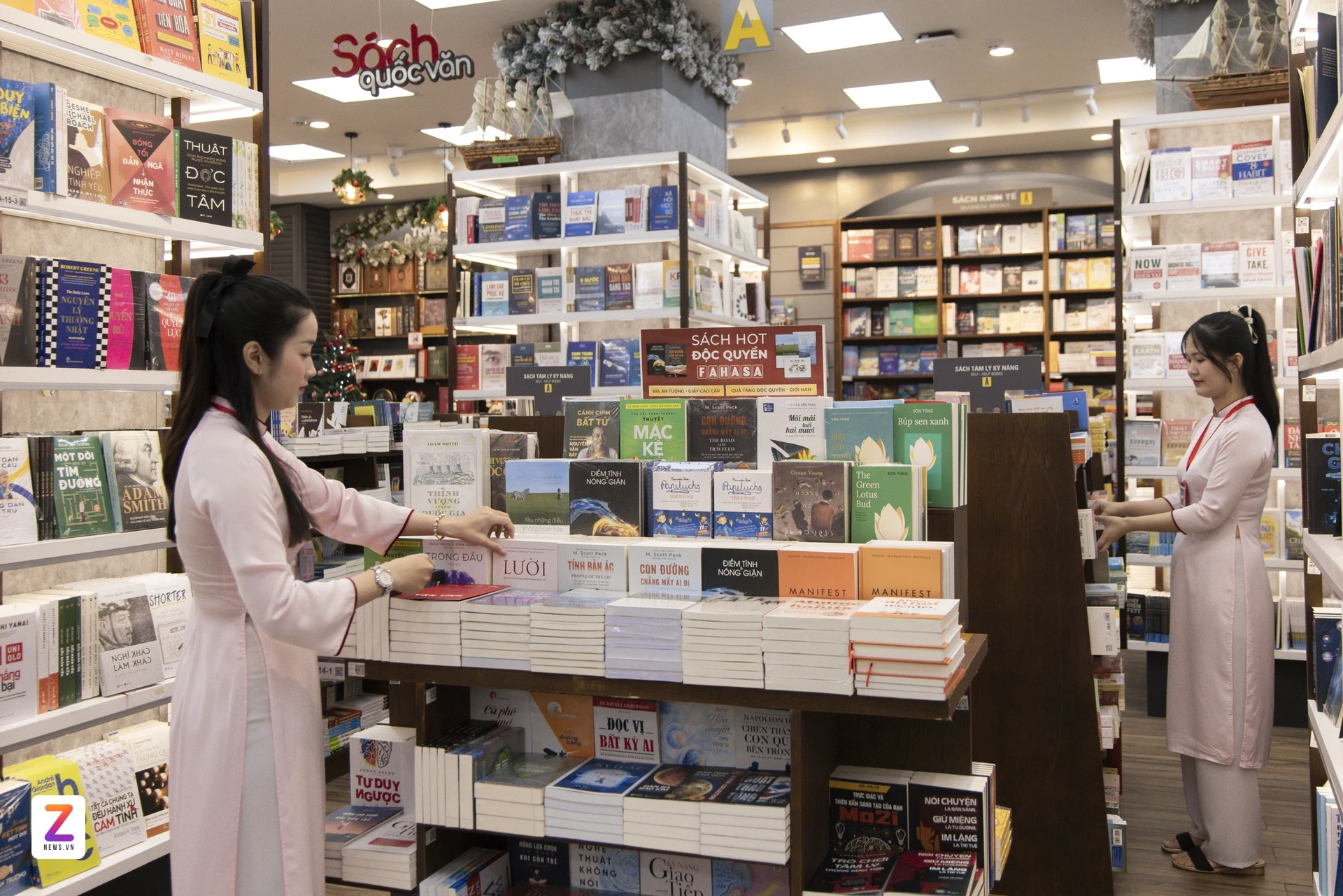
Over half a century, FAHASA has evolved from a state-subsidized book distribution system into a nationwide retail chain, operating 140 bookstores and generating revenue of VND 4.23 trillion in 2025.
According to FAHASA’s 2025 financial report, the company recorded net revenue of VND 4.228 trillion, marking a 5% increase year-on-year, with nearly 140 bookstores across 25 provinces and cities.
To reach its current trillion-dong scale, the company has gone through decades of ups and downs-from taking over bookstores after 1975 to enduring the crisis of the late 1980s. As recalled by industry insiders, there was even a time when state-owned bookstores in Ho Chi Minh City had to partition their premises to sell socks, shoes, and general merchandise just to stay afloat.
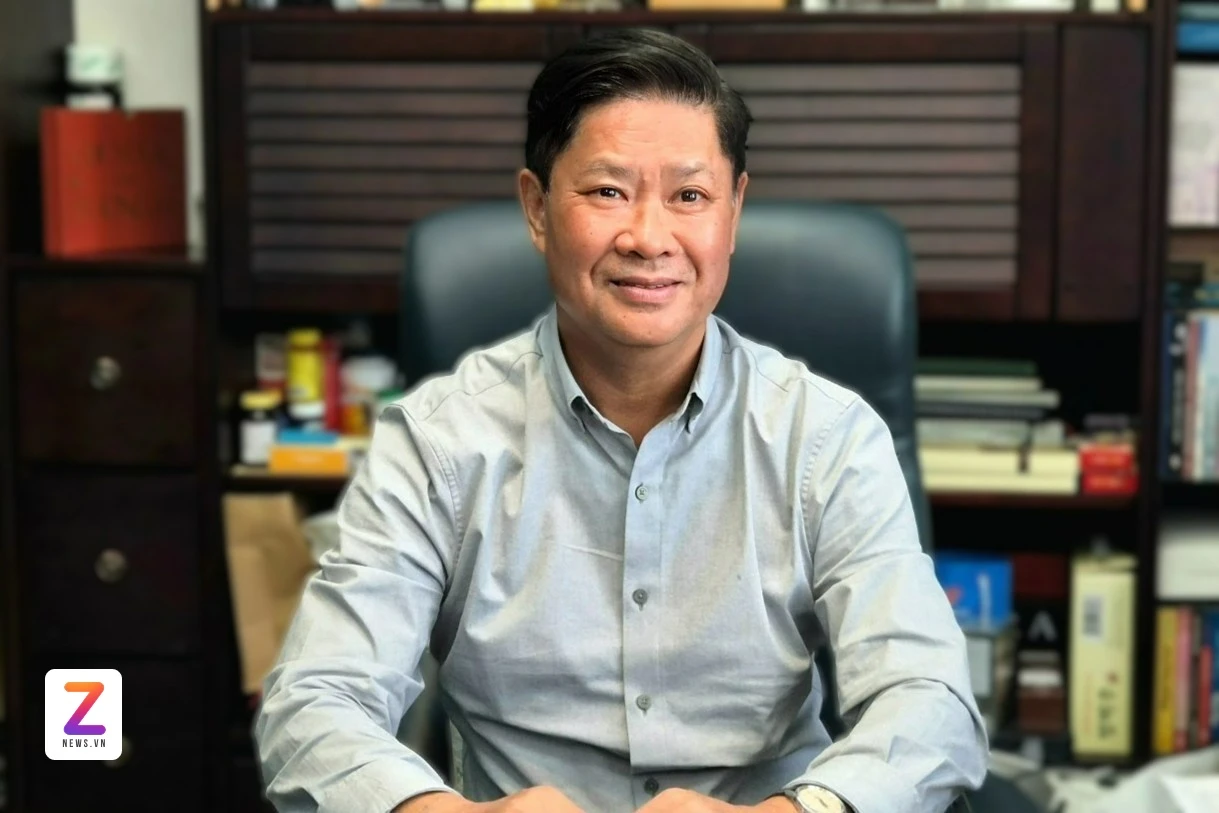
Chairman Phạm Minh Thuận, who has led the company since its equitization in 2006, shared with Tri Thuc – Znews on the occasion of FAHASA’s 50th anniversary about the survival challenges of the book distribution industry and his vision of positioning bookstores as “anchor tenants” of value within modern shopping malls.
Crisis Years That Forced Bookstores to Sell Shoes
- As someone with long experience in the industry, how did the book distribution sector operate during the period of the Ho Chi Minh City State-Owned Book Distribution system?
- After April 1975, the city entered a new chapter as the country was reunified, and the demand for revolutionary books and newspapers among the public was quite high. To meet this strong appetite for information, by the end of 1975, a distribution unit under the Department of Culture and Information was established to receive publications from the North and distribute them in Ho Chi Minh City.
“We remain committed to the philosophy of ‘Master one craft, and you will thrive’—we do not branch out into manuscript development or publishing, but focus solely on one mission: developing our bookstore retail chain.” Phạm Minh Thuận, Chairman of the Board, FAHASA
One of the most memorable milestones was August 6, 1976, when the Ho Chi Minh City State-Owned Book Distribution Company-the predecessor of today’s FAHASA-was officially established. FAHASA began building its organizational structure, from leadership to warehouse systems and operational departments, to receive books from the Vietnam Book Distribution Corporation and distribute them to People’s Bookstores across districts.
Ho Chi Minh City has long been an urban center with a highly educated population. At that time, people showed strong interest in exploring new ideas and policies through books. However, the supply of books was still quite limited compared to actual demand, so any book released for sale would quickly sell out. It can be said that books sold exceptionally well during that period, driven by the city’s strong spirit of learning and curiosity for new knowledge.
How did the book industry evolve when Vietnam entered the Doi moi (Renovation) period in 1986?
From 1986 onward, when Vietnam entered the Doi moi (Renovation) period, it truly marked a turbulent turning point and the greatest challenge in the history of book distribution units in Ho Chi Minh City in particular and across the country in general.
Before 1986, we operated entirely under a centrally planned economy, where everything from food to books was distributed according to state allocation. With the onset of Đổi mới, the book industry began to “open up” significantly, with more diverse sources of publications emerging. Provincial publishing houses started printing independently, and notably, private distributors-commonly referred to at the time as “traders” or “middlemen” began to rise.
The market also saw the emergence of so-called “instant books” fast-produced titles such as crime stories and romance novels that sold extremely well. Meanwhile, state-owned book distributors were less agile than private players, resulting in high inventory levels. This was arguably the most difficult period, when many bookstores faced real survival challenges.
To stay afloat, many bookstores had to partition their premises renting out space or selling additional goods such as general merchandise and footwear. Even well-known bookstores like Saigon and Xuan Thu had to devote half of their floor space to selling shoes just to cover operating costs.
From the early 1990s onward, the company began restructuring its bookstore system more systematically, offering a wider range of products and books. The leadership at the time also adopted a more proactive mindset: instead of relying solely on planned supply, FAHASA actively sourced legally published books from various channels to meet the increasingly diverse demands of society. Thanks to this flexibility, business performance from 1990 to 1995 showed clear signs of improvement.
– When did the company officially emerge from that crisis?
– The biggest milestone in the innovation process came in the mid-1990s, around 1995–1996, when the Xuân Thu bookstore on Đồng Khởi Street and the Nguyễn Huệ bookstore were renovated. If before 1990, foreign-language books in Vietnam were almost entirely limited to Russian titles, then after 1995, the company began directly importing books from major global publishers such as Oxford and Cambridge.
Notably, this was also when FAHASA introduced the “self-selection” model. Previously, buying books was similar to buying medicine-books were kept behind the counter, and customers had to point to a title for staff to retrieve it. Starting in 1995, customers were allowed to freely enter display areas, pick up books themselves, browse, and experience them before making a purchase. This model created a wave of enthusiasm among readers at major bookstores such as Nguyễn Huệ, Xuân Thu, and Sài Gòn.
From this period onward, the company’s leadership also began proactively leasing locations to open new bookstores. Although growth at that time was not yet highly visible and expansion was still largely confined to Ho Chi Minh City, these developments laid important foundations for the company’s later entry into the professional retail market.
– At that time, FAHASA only had standalone bookstores. What motivated the company to develop into a nationwide retail chain?
– Another turning point came in 2005–2006, when the company was officially equitized, coinciding with the period when Vietnam was preparing to join the World Trade Organization. This transition fundamentally changed the nature of corporate governance and business operations. The State no longer imposed rigid production targets but instead acted as an investor; the enterprise had to assess risks independently and seek its own growth opportunities. The economic environment at that time became highly open, no longer constrained by provincial or municipal administrative boundaries.
Looking at the overall picture, we recognized that Ho Chi Minh City accounted for up to 70% of the country’s book supply (including publications from local publishers, central publishing houses, and private companies).
Instead of limiting itself to nearly 20 stores in the city, FAHASA decided to allocate 100% of its financial and human resources to implement the strategy of “developing a professional nationwide bookstore system.”
We have remained committed to the philosophy “Master one trade, and you will succeed,” avoiding expansion into manuscript development or publishing. Instead, the company focuses solely on building a retail bookstore chain and professionalizing the distribution of books and cultural products.
To becoming a trillion-dong bookstore chain in Vietnam.
– Managing a retail system stretching from North to South with hundreds of thousands of SKUs, how do you handle operations and apply technology?
– Currently, we manage around 400,000 product titles. If everything were done manually, the system simply wouldn’t be able to function. As early as 2006, we had already hired software companies to develop a management system for FAHASA’s bookstore network.
Ultimately, without passion, dedication, and constant concern for the book industry, no one could have remained committed to and built a bookstore system over several decades to what it is today. Phạm Minh Thuận, Chairman of the Board of Directors of FAHASA
Today, technology systems and Artificial Intelligence support all management, operational, and business functions across the company’s nationwide supply chain and retail network.
The real-time data system automatically generates alerts indicating which products are experiencing a surge in sales and should be prioritized for display, as well as which items show signs of overstock and should immediately be halted from further procurement. Inventory checks at a large bookstore, which previously took up to 20 days to complete, can now deliver more accurate results within just 30 minutes after completion thanks to technology. Additionally, 90% of paper-based documents within the organization have been eliminated.
With a well-structured and efficient organizational system combined with professional technology infrastructure, labor productivity has significantly improved. For example, in 2020, the company required 2,300 employees to generate 3,285 billion VND in revenue; by 2025, revenue increased to 4,230 billion VND, while the entire system operated with only 2,200 employees.
– How do you assess the development potential of physical bookstores in the current era, where e-commerce platforms and e-books are rapidly growing?
– In reality, e-books in Vietnam have not yet developed strongly due to issues related to technological platforms, security, and copyright. Many authors and publishers remain hesitant about digitization because copyright violations in the digital space can cause greater damage and are much harder to control than with printed books. Meanwhile, Vietnamese consumer habits view visiting bookstores as a genuine cultural and recreational activity, not merely a shopping task.
I believe that physical bookstores will not be eliminated but will instead develop alongside technology to adapt. When bookstores provide a strong in-person experience combined with attentive service, they remain vibrant, irreplaceable spaces. Printed books and traditional bookstores still hold a distinct position thanks to the emotional and social experiences they offer, especially for younger generations.
Returning to the human story: having been with FAHASA since the 1970s and rising from an employee to Chairman of the system, what has defined your personal mark?
At the micro level, I am the one who personally conducts site surveys and decides on opening each bookstore. Whether in Hà Tĩnh, Nghệ An, or Quảng Trị, before making any investment decision, I always visit the location myself to ensure that the system’s risk level remains at the lowest possible level (in the single digits).
Ultimately, without passion, dedication, and constant concern for the book industry, no one could stay committed and build a bookstore system over the long term.
– In a market where consumer behavior changes month by month, how are you preparing for the transition to the next generation of leadership?
– The transition is not something that happens instantly; it is a process of overlap and succession. At present, I am stepping back to focus on macro-level strategy, evaluating business models, and organizing the overall structure. The operation of FAHASA’s nationwide bookstore system has been entrusted to a younger generation that is well-educated, dynamic, and passionate about the work.
The advantage of today’s younger leadership lies in their strong technological foundation. In a context where the habits of generations like Gen Z and Alpha are changing rapidly, any retail manager without technological support across all aspects will inevitably struggle. However, if someone is only proficient in technology but lacks business management thinking, operational expertise, and a deep understanding and passion for the book industry, they will remain merely a technical worker.The combination of extensive macro-level experience and the ability to solve operational challenges through digital technology is the key for the book distribution industry to survive and develop sustainably.
Thank you for your insightful sharing!
For more details, please follow: Half a century of transformation into a trillion-dong empire








Related posts
A Formidable Rival in the Mid-Autumn Mooncake “Race”
During the Mid-Autumn Festival, Vietnamese publishers and bookstores are experimenting with new ways to bring book content into products, services, and experiential activities. A mooncake gift box is designed to resemble an oversized book. Inside are a copy of Mario Puzo’s novel The Godfather and four mooncakes. Priced at around VND 1 million, the product was developed by a Vietnamese book company. Beyond selling books, many publishers and book distributors in Vietnam are also developing products, services, and experiences tied to special occasions throughout the year, with the Mid-Autumn Festival being a notable example. Bookstores Sell Mooncakes Speaking with Tri...
Celebrating FAHASA’s 50-Year Journey of Growth and Development (August 6, 1976 – August 6, 2026)
On the morning of August 6, 2026, at THISKYHALL Convention Center, Ho Chi Minh City Book Distribution Corporation – FAHASA solemnly held its 50th Anniversary Celebration (1976–2026), marking a significant milestone in the company’s journey of establishment, growth, development, and service to the community. On this meaningful occasion, FAHASA was honored to receive the First-Class Labor Order, along with other prestigious awards and commendations from the Party, the State, and the Government. These honors recognize FAHASA’s persistent efforts and significant contributions to business development, the promotion of reading culture, and community service. As part of the anniversary celebration, Mr. Pham...
FAHASA – Hành Trình 50 Năm Phục Vụ Cộng Đồng, Lan Tỏa Tri Thức
Over the course of 50 years of establishment and development, FAHASA has remained steadfast in its mission of “Serving the Community – Spreading Knowledge,” continuously innovating and growing to bring books and knowledge closer to readers. During its 20 years of operation under the joint-stock company model (2006–2025), FAHASA achieved many remarkable results. In 2025, the Company recorded revenue of VND 4.228 trillion, representing a tenfold increase compared with 2005. Profit and contributions to the State Budget increased by more than 30 times; the number of bookstores grew tenfold; total retail space expanded fifteenfold; the number of books and cultural...