

Proper, Traditional, and Feng Shui-Appropriate
Decorating the ancestral altar for Tết is one of the most important traditions in Vietnamese households as the old year comes to an end and the new year approaches. This practice is not only deeply rooted in tradition but also expresses reverence for ancestors, gratitude toward one’s roots, and prayers for peace, good fortune, and prosperity in the coming year.
However, not everyone knows how to decorate the altar for Tết in a way that is both proper and feng shui-compliant while still maintaining the necessary solemnity. In the article below, FAHASA helps you understand essential principles, avoid common mistakes, and apply these guidelines easily to various living spaces-from townhouses and apartments to traditional homes.
The Significance of the Ancestral Altar During Tết
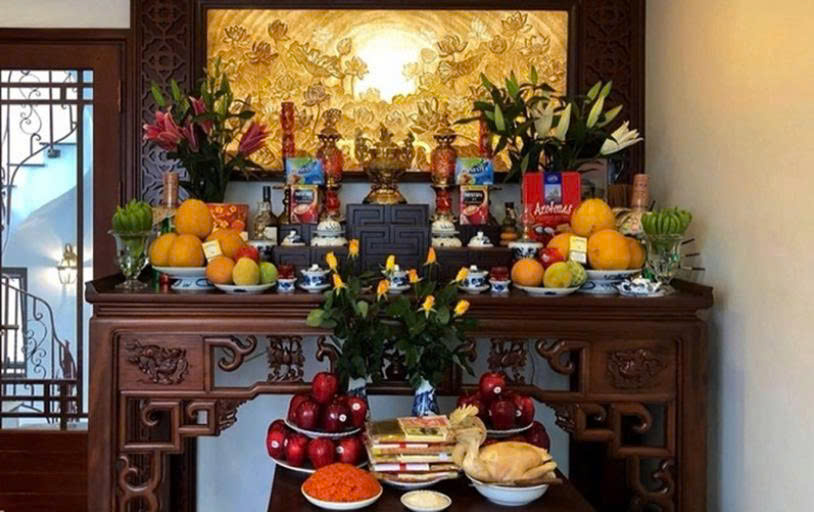
In Vietnamese spiritual life, the ancestral altar is the most sacred space in the home. Especially during Lunar New Year (Tết Nguyên Đán), the altar is not only a place of worship but also carries deep symbolic meaning:
- A place for descendants to remember and honor their ancestors
- A reflection of the traditional value of gratitude and remembrance of one’s origins
- A spiritual focal point where families pray for harmony, smooth endeavors, and abundant prosperity
For this reason, decorating the altar for Tết is not merely about aesthetics-it must adhere to rituals, traditions, and feng shui harmony.
Basic Principles for Arranging the Altar During Tết
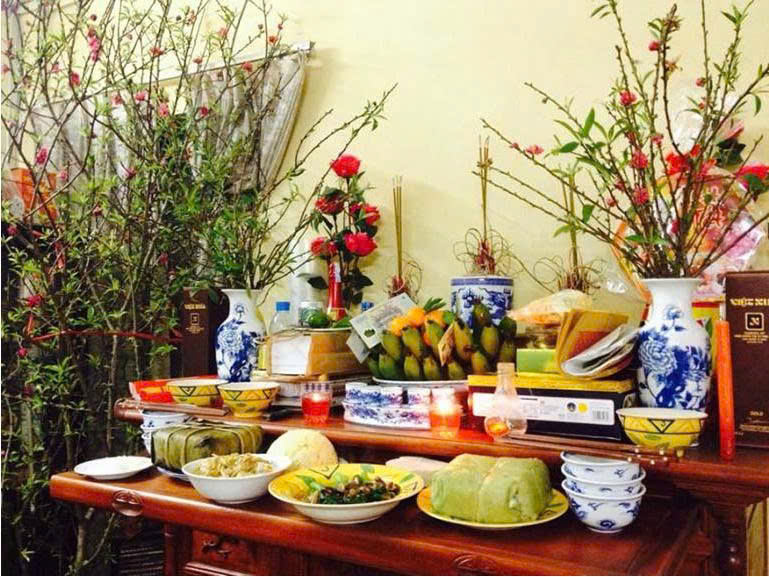
Placement of the Five-Fruit Tray, Flowers, Incense, and Candles
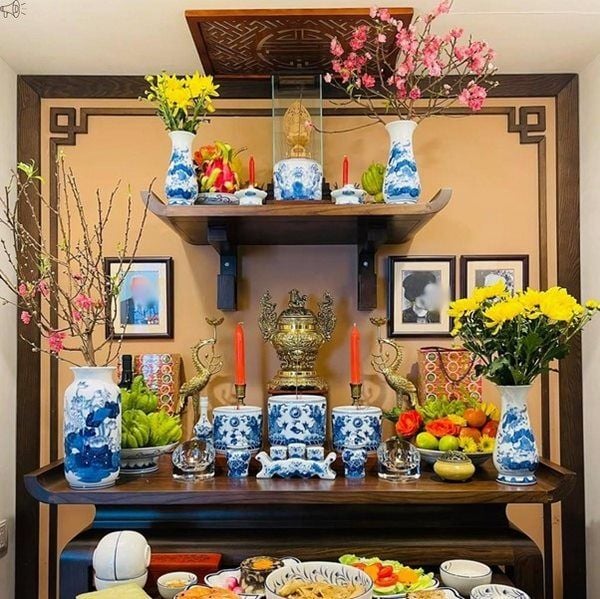
To ensure the altar is both visually pleasing and properly arranged, homeowners should follow these traditional principles:
- Incense burner: Placed at the center of the altar; it should not be moved casually, especially during Tết.
- Five-fruit tray: Typically placed in front of the incense burner or slightly to the left (from the viewer’s perspective), symbolizing the five elements and wishes for abundance.
- Fresh flower vase: Positioned symmetrically opposite the fruit tray, with flowers that carry positive meanings such as chrysanthemums, gladiolus, peach blossoms, or apricot blossoms.
- Oil lamps or candle holders: Arranged evenly on both sides to create yin-yang balance and add warmth to the worship space.
An important rule to follow is “higher at the back, lower at the front,” ensuring ancestral photos or tablets are not obstructed.
Important Taboos to Avoid When Decorating the Altar for Tết
In addition to proper arrangement, families should strictly avoid the following mistakes:
- Using artificial flowers or artificial fruit on the altar
- Displaying wilted flowers, damaged fruit, or stale offerings
- Overdecorating with excessive or overly flashy items
- Placing the altar near unclean, noisy, or non-solemn areas
- Allowing dust accumulation or excessive incense ash during the early days of the new year
These mistakes not only affect aesthetics but can also diminish the spiritual and feng shui significance of the altar.
Suggested Decorative Items That Maintain Solemnity
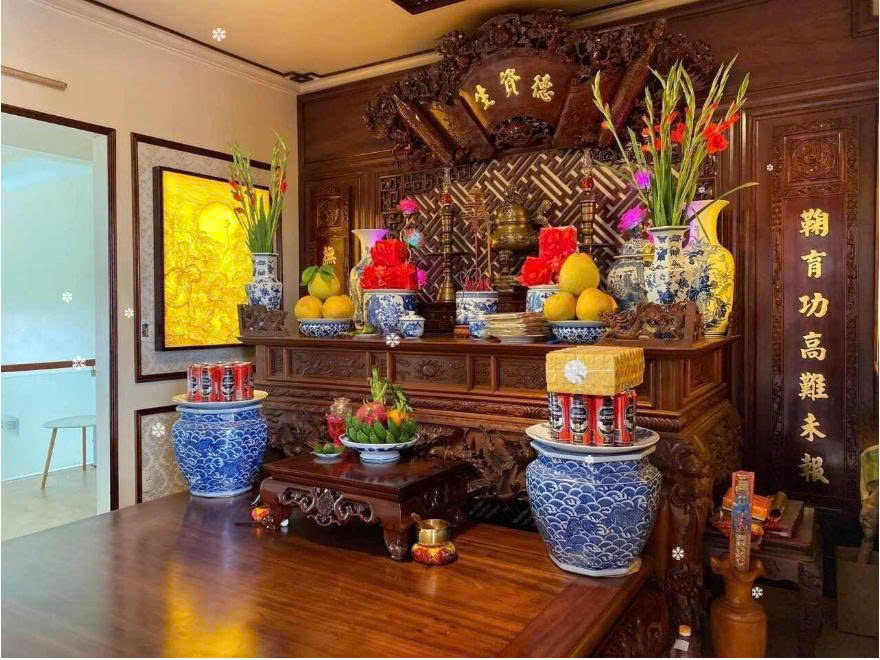
Beyond essential worship items, families may add subtle decorative elements to enhance warmth while preserving reverence:
- Red-and-gold calligraphy couplets symbolizing New Year blessings
- Worship lamps with soft yellow light or traditional oil lamps
- A coordinated ceremonial tea cup set matching the incense burner
- Natural agarwood incense to purify the air and create a peaceful atmosphere
When selecting decorative items, the guiding principles should be simplicity, refinement, and consistency, avoiding overcrowding that makes the altar appear heavy or cluttered.
Coordinating Colors and Lighting Around the Altar Area
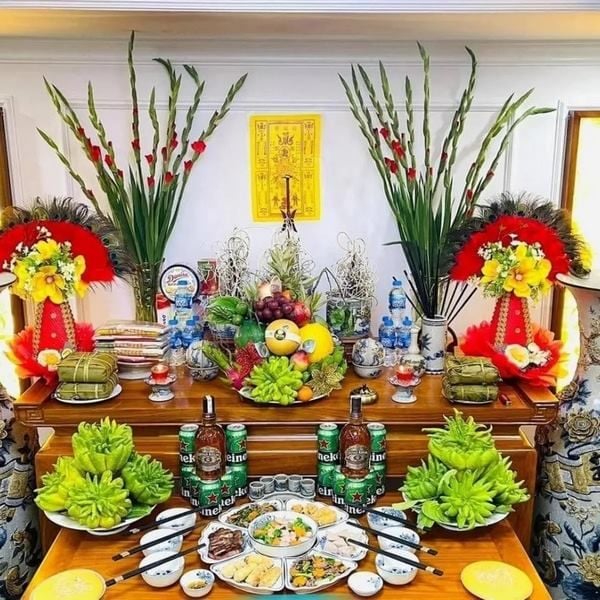
Color plays a vital role in generating positive energy in the altar space during Tết. Preferred color tones include:
- Red and gold: Symbols of luck, prosperity, and vitality
- Wood brown and deep gold: Creating a warm, dignified, and solemn ambiance
For lighting, warm yellow light is recommended. Avoid harsh brightness, flashing lights, or cool white lighting, as these can disrupt the calm and sacred atmosphere of the altar area.
Proper Cleaning and Preparation of the Altar Before Tết
Before Tết, families traditionally clean the altar to welcome the new year. This process should be done carefully and respectfully:
- Choose an auspicious day, typically before the 23rd day of the twelfth lunar month
- Prepare separate cleaning cloths exclusively for the altar.
- Clean from top to bottom and from the inside out
- Use warm water mixed with ginger wine or pomelo leaf water for purification.
Proper altar cleaning symbolizes the removal of old energies and the welcoming of new, positive energy, helping the family enter the new year with peace and serenity.
Conclusion
Decorating the ancestral altar for Tết does not need to be elaborate or costly. What matters most is care, adherence to traditional customs, and sincerity. A neatly arranged, feng shui-appropriate altar contributes to a sense of peace and good fortune for the entire family throughout the new year.
Visit the website and Facebook page to explore thousands of beautiful, diverse Tết decoration products and attractive promotions from FAHASA.
FAHASA CORPORATION






Related posts
Celebrating the 50th Anniversary of FAHASA (August 6, 1976 – August 6, 2026)
On August 6, 2026, the 50th Anniversary Celebration of Ho Chi Minh City Book Distribution Corporation – FAHASA was solemnly held at Thiskyhall Convention Center, Sala (10 Mai Chi Tho Street, An Khanh Ward, Ho Chi Minh City), marking a significant milestone of half a century of establishment, growth, and development. Over the past 50 years, FAHASA has steadily expanded its operations, becoming one of Vietnam’s leading enterprises in the distribution of books and cultural products. The achievements FAHASA celebrates today are the result of the sound leadership and strategic direction of the Company’s Board of Management, together with the...
FAHASA Celebrates Its 50th Anniversary, Reaffirming Its Mission of ‘Serving the Community – Spreading Knowledge’
On the morning of August 6, Ho Chi Minh City Book Distribution Corporation (FAHASA) held a ceremony to celebrate its 50th anniversary (August 6, 1976 – August 6, 2026) and receive the First-Class Labor Order. This significant milestone marks half a century of promoting knowledge and supporting the development of reading culture by one of Vietnam’s leading book distribution brands. The ceremony was attended by former State President Truong Tan Sang; former Vice State President Dang Thi Ngoc Thinh; Van Thi Bach Tuyet, Deputy Secretary of the Ho Chi Minh City Party Committee; Nguyen Manh Cuong, Vice Chairman of the...
FAHASA Is Honored to Receive the First-Class Labor Order Conferred by the President of the Socialist Republic of Vietnam
On the morning of August 6, 2026, at THISKYHALL Convention Center, Ho Chi Minh City Book Distribution Corporation – FAHASA solemnly held its 50th Anniversary Celebration (1976–2026), marking a significant milestone in FAHASA Corporation’s journey of establishment, development, and service to the community. The ceremony was honored by the presence of former Presidents and former Vice Presidents of the Socialist Republic of Vietnam; incumbent and former leaders of central authorities and Ho Chi Minh City; representatives of municipal departments, agencies, and sectors; leaders of publishing houses; domestic and international partners and customers; representatives of press and media agencies; FAHASA leaders...